Recycling and Sustainability for Gardeners Clerkenwell
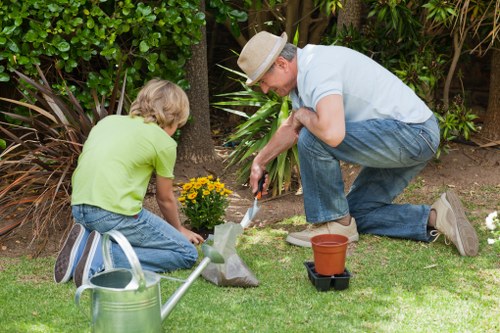 Gardeners Clerkenwell is shaped by a simple idea: beautiful outdoor spaces should not come at the expense of the environment. Our approach to recycling and sustainability is built into everyday working habits, from sorting green waste properly to choosing lower-emission transport and using local disposal routes that reduce unnecessary mileage. In a busy part of London, where space, access and disposal rules all matter, a thoughtful recycling system helps keep garden projects efficient and responsible. For Gardeners Clerkenwell, sustainability is not an extra service; it is part of how we maintain gardens with care.
We set a clear recycling percentage target across our operations, aiming to divert at least 90% of suitable garden waste from general disposal streams. That includes green material such as leaves, grass cuttings, prunings and soil-free organic debris, which can often be processed separately rather than sent to mixed waste. By tracking waste categories more carefully, Clerkenwell gardeners can support a cleaner, lower-impact cycle for the materials removed from city gardens, courtyards and roof terraces.
Another important part of our sustainable garden maintenance is the use of local transfer stations. Working through nearby facilities helps reduce long-distance transport and makes waste handling more efficient. In central London, transfer stations play a practical role in consolidating materials before they are sent on for reprocessing or recovery. For garden waste, this can mean a smoother route from site clearance to composting or bulk processing, especially when volumes are too large for standard household collection. 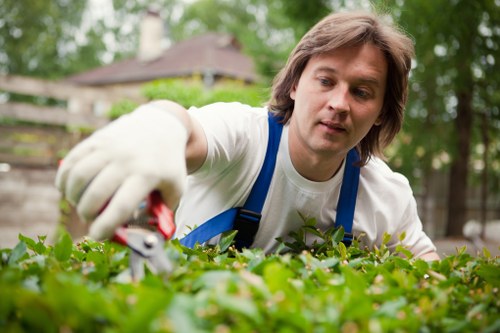
We also keep a close eye on borough-level waste separation practices, because the way materials are sorted locally affects what can be recycled well. In many nearby boroughs, mixed recycling is separated from food waste, garden waste and residual rubbish, and that principle influences our own working methods. Where possible, we separate organic garden matter, timber offcuts, planters, metals, plastics and reusable hardscape items before anything leaves the site. This careful sorting supports the broader recycling systems that London boroughs depend on.
 Charitable partnerships are another key part of our sustainability work. Usable pots, tools, decorative containers, surplus compost bags, edging materials and some furniture items can often be passed on to charities rather than discarded. This gives longer life to products that still have value and helps local causes benefit from items that would otherwise become waste. For gardeners in Clerkenwell, re-use is just as important as recycling, because it keeps resources in circulation and reduces the demand for new production.
Our recycling approach is also supported by a practical fleet strategy. Low-carbon vans help cut emissions associated with travel between sites, transfer stations and suppliers. We favour vehicles with improved fuel efficiency and reduced exhaust output, because short urban journeys can create disproportionate pollution in dense neighbourhoods. Choosing lower-carbon transport is especially relevant in central London, where traffic, idling and stop-start driving can increase a van’s environmental footprint. A more efficient fleet helps make garden care in Clerkenwell cleaner from start to finish.
The sustainability measures we follow are designed to fit the realities of local gardening. In compact spaces, waste often includes a mix of soft green material, broken containers, packaging from soil and mulch deliveries, and occasional metal or timber components from old fixtures. By separating these materials early, Clerkenwell garden recycling becomes more effective and less dependent on final-stage sorting. It also reduces contamination, which is crucial when organics are destined for composting or other forms of recovery.
We also look for opportunities to reuse before recycling. For example, clean topsoil can sometimes be screened and returned to the garden, while chipped branches may be used as mulch where appropriate. Stone, brick and paving remnants may be retained for edging or small repair work if they are structurally sound. These choices help minimise disposal volumes and make better use of the materials already present on site. In this way, recycling for Gardeners Clerkenwell is linked to a broader circular approach to garden management.
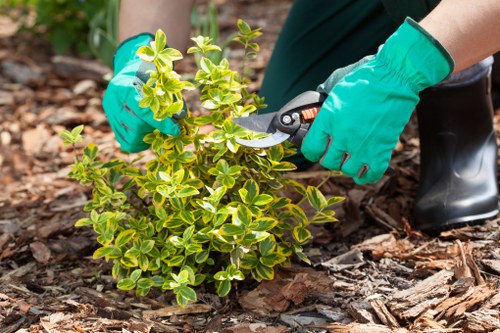 Because sustainability is a process rather than a single action, we review how materials move through each job. That means considering not just what is removed, but how it is handled, stored and transported. Clear bags for green waste, segregated containers for mixed recyclable materials and careful loading procedures all help maintain better sorting standards. Where local rules and site conditions allow, we align our practices with borough recycling expectations so that the waste leaving a garden is easier to process responsibly.
 Gardeners Clerkenwell is committed to keeping environmental impact low while still delivering tidy, healthy and attractive outdoor spaces. From a 90% recycling target to local transfer stations, charity reuse partnerships and low-carbon vans, every part of the service is shaped around better resource use. That commitment matters in Clerkenwell, where small green spaces, shared courtyards and urban planting all benefit from maintenance that respects both the garden and the wider city.
As demand grows for more responsible horticultural services, recycling and sustainability remain central to how we work. The goal is straightforward: reduce waste, keep reusable materials in circulation, and support the local systems that make London greener in a practical, measurable way. For Gardeners Clerkenwell, that means maintaining gardens with precision while making sure environmental care is built into every stage of the job.